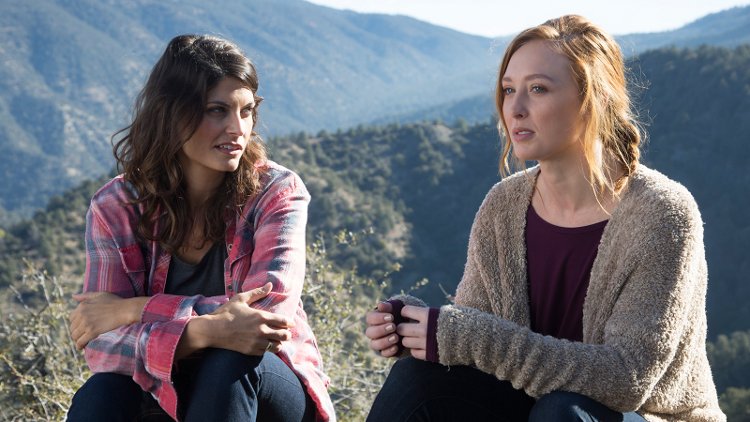
‘Visible: Out on Television’

I thought this was fascinating, such an interesting timeline of visibility of the LGBTQ population on TV and in movies.

Variety

From Apple TV Plus: TV Review From executive producers Wanda Sykes and Wilson Cruz, ‘Visible: Out on Television’ is a deeply thoughtful and researched look at TV’s LGBTQ+ representation.

By Caroline Framke
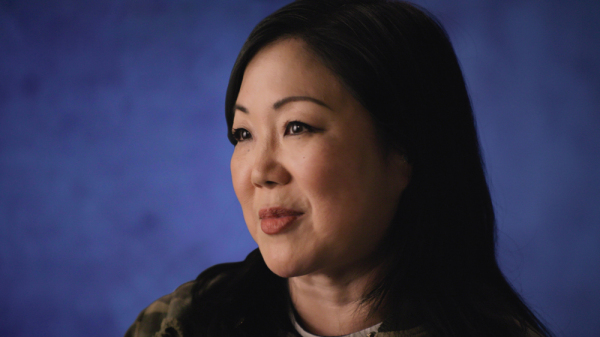
margaret-cho

As with just about any phrase that gets repeated over and over throughout the years, “representation matters” has threatened to become a benign catchall for Hollywood’s ills. But the saying is nonetheless rooted in a simple, powerful sentiment: that seeing a piece of yourself meaningfully represented in media can enable deeper understanding for you and the broader audience alike. Beyond mere entertainment, representation has the capacity to change minds — for better and for worse.

This conflict forms the spine of “Visible: Out on Television,” a new docu-series from Apple TV Plus that conveys the breadth of LGBTQ+ representation on American television from the medium’s beginnings through today. It’s a hugely ambitious project, and it takes its mission seriously, featuring a genuinely astonishing breadth of research and dozens of interviews with LGBTQ+ actors (including executive producers Wilson Cruz and Wanda Sykes), writers, allies and activists. It’s fascinating and educational to see archival footage from across decades of TV genres — and even moreso to understand just how much TV has been used both as a weapon and a balm to long-suffering wounds.

“Visible” unfolds chronologically over five episodes, each relatively framed around a specific theme: “The Dark Ages,” “Television as a Tool,” “The Epidemic,” “Breakthroughs,” “The New Guard.” The first three chapters are particularly strong, especially as they examine areas of media coverage like news reports, reality shows, soap operas and talk shows, all of which have heretofore been underserved in the larger conversation about LGBTQ+ representation on TV.

“The Dark Ages,” for example, doesn’t just mention that the first iteration of the word “homosexual” on television occurred during the McCarthy hearings, but details the ripple effects in media and beyond. (Former “Project Runway” mentor Tim Gunn speaks movingly in interviews about how they spurred his father, a “macho FBI agent,” to lash out even harder at his seemingly gayer tendencies as Gunn was growing up.) It also convincingly argues that invisibility is a curse, meant to keep marginalized people down by insisting that they’re not there, and by proxy, don’t matter.

“Television as a Tool” movingly speaks to the ways in which gay activist groups recognized the potential power of television as a platform with which to spread awareness of their presence and goals, with activist Mark Segal discussing his frequent attempts to interrupt live news broadcasts with their message. “The Epidemic” focuses more specifically on how the rise of AIDS was covered — or more commonly, not covered — in the news and scripted programs alike, though its driving story is that of Pedro Zamora, the “Real World: San Francisco” cast member whose sympathetic portrayal and shocking death shook the country like few other queer people on TV ever had (or could).

As could be reasonably expected, the last two episodes that creep closer to the present aren’t nearly as focused as the first three, without the advantage of greater distance from its subjects to reflect. And while “Breakthroughs” at least has Ellen DeGeneres’ game-changing coming-out episode on her sitcom to loosely hold it together, “The New Guards” jumps from milestone to milestone without much of the critical insight that makes the earlier chapters so resonant. Take, for instance, its quick dissection how important Chris Colfer and Max Adler’s gay characters were on “Glee,” without mentioning Naya Rivera’s crucial teen lesbian one, or the often messy show’s weaker spots on LGBTQ+ representation, despite its best intentions. Or the relatively brief dives into trans and bisexual characterization on TV, both seemingly limited by the interview subjects that “Visible” landed to discuss it.

And yet, to its credit, the series strives far more often to provide the kind of nuance and counter-narratives that few others would. A discussion of “Will & Grace” as a groundbreaking sitcom includes people of color like “Pose” star Billy Porter making sure to add that its view was, and is, almost exclusively limited to white experiences. Activist interviews with figures like Segal and Miss Major Griffin-Gracy bring in necessary, grounding historical perspective. “Visible” even manages to have some fun in segments like the one in which DeGeneres and Sykes look back on all the iconic characters they interpreted as being lesbians over the years — Lucy Lawless’ Xena chief among them, of course — thanks to their demeanors and narrative coding.

What makes “Visible” remarkable is this kind of attention to detail and broader context, not to mention its obvious commitment to including queer voices as expert witnesses. Its in-depth study of a seemingly impossible subject to sum up is very impressive — and, I daresay, necessary. As LGBTQ+ representation multiples and improves, it’s become an easy line for bad faith bigots to declare that enough might just be enough, the culture war’s been won, they get it, queer people exist. But as “Visible” makes clear within just a few searing minutes, the current proliferation of queer content was hard-won over decades of invisibility, hostility and hardship. Now, as more and more people might understand what it means to be queer in America thanks to more and more representation thereof on television, it’s even more important to remember the obstacles and battles it took to get here, so as not to go backwards.

© Copyright 2020 Variety Media, LLC, a subsidiary of Penske Business Media, LLC. Variety and the Flying V logos are trademarks of Variety Media, LLC.
Powered by WordPress.com VIP

Lola Lennox

This is a fantastic interview of the daughter of world-famous singer and songwriter Annie Lennox. Lola Lennox. It is from Get Out Magazine

Text_GETOUT-white-copy edit

By Get Out! Contributor – Apr 29, 2020

Interview by Lovari

LolaLennox-Photo-Daniella-Midenge_02

When I first heard Lola Lennox singing via an Instagram post, I was astounded at the various textures and tones that resonated through her vocals with each phrasing. To say that I was impressed is an understatement. With the release of her single “In The Wild”, it solidified my appreciation for her as both an artist and songwriter.

Lovari: The Discovery Channel’s six part series “Serengeti”, created by Simon Fuller (American Idol), includes your vocals as lead on the title theme, along with other scenes in the entire score. It’s very unique as it also reflect’s the animal’s emotions. Tell me about that experience.

Lola Lennox: “I worked with Will Gregory of Goldfrapp on the song. We used different sounds along with the lyrics to depict what the animals were going through. The music was the key to the stories. Each animal goes through an individual journey. It is quite emotional. Their struggle for survival is real. It’s brutal.”

Lovari: Your song “In The Wild” is the first of four singles you are planning to release this year. What is the concept behind the music video?

Lola Lennox: “Elements of the video depict the concept of the song. For example, the grey colors indicate the suffocation in a relationship. The element of water in it is to cleans our sins, so to speak. As the video continues, the coldness and complications get replaced with flowers, a garden, and again, places of water. The song is based on a previous relationship.”

Lovari: How are the new tracks shaping up? Any working titles?

Lola Lennox: “We are in the studio working on some tracks, most recently “Pale” and “Back At Wrong”. Each of them have different spectrums of emotion, varying from mid tempo and uptempo. They are all original and the lyrics come from my life experiences.

Lovari: Your tone is amazingly unique in each phrase of your two single releases. That being said, who are some of your musical influences?

Lola Lennox: My musical influences are emotionally raw and honest women, including Etta James and Dusty Springfield. In regard to current vocalists, I love Adele, Lana Del Rey, Florence Welsh, and Sia.”

Lovari: Obviously, music is inclusive and universal. Would you like to shout out a message to our readers?

Lola Lennox: I want to send out my love to the LGBTQI community. You rock guys! I am grateful for your support.

***

Lola Lennox Fruchtmann turned 30 years of age on 11 December 2019. She was destined to Uri Fruchtmann — Israeli human rights dissident, movie maker, and chief — and Annie Lennox, a Scottish vocalist musician in London, England, the United Kingdom.

Lola has a more youthful sister, Tali Lennox, likewise a model and entertainer.

Lola tried out an extremely esteemed music school in the UK seeking after the way spread out by her mom. She joined up with the Royal Academy of Music to graduate with a degree in music.

Connect with Candice Christian

I really appreciate you reading my book! Please, if you have time, review my book. Here are my social media coordinates:
Join me on Facebook Group:
https://www.facebook.com/pg/Fans-of-Candice-Christian-2167845756865295/about/?ref=page_interna
Favorite my author page:
https://www.smashwords.com/books/view/914732
Subscribe to my blogs:
https://eroticlesbianromance.blog/
https://candicechri.blogspot.com/
Visit my website for free stuff and news about releases:
https://candicechristian20.wixsite.com/website

Split over gay marriage delayed, United Methodists face a year in limbo…

There seems to be a religious debate of gay rights. At least they are talking about it. This great article from Lavender Magazine gives the details.

With split over gay marriage delayed, United Methodists face a year in limbo

America’s largest mainline Protestant denomination had planned to meet this week for a likely vote to split over differences on gay marriage and LGBTQ pastors.
by  | May 6, 2020 | Big Gay NewsTop Headlines | 0 comments
By The Associated Press

Had there been no coronavirus pandemic, America’s largest mainline Protestant denomination would be convening this week for a likely vote to break up over differences on same-sex marriage and ordination of LGBTQ pastors.

Instead, the United Methodist Church was forced to postpone the potentially momentous conference, leaving its various factions in limbo for perhaps 16 more months. The deep doctrinal differences seem irreconcilable, but for now there’s agreement that response to the pandemic takes priority.

“The people who are really in trauma right now cannot pay the price of our differences,” said Kenneth Carter, the Florida-based president of the UMC’s Council of Bishops. “What is in our minds and hearts is responding to death, illness, grief, loss of work.”

The conference was to have taken place at the Minneapolis Convention Center starting Tuesday, running through May 15. Instead, bishops are proposing to hold it there Aug. 31-Sept. 10 of next year.

The differences have simmered for years, and came to a head in February 2019 at a conference in St. Louis where delegates voted 438-384 for a proposal strengthening bans on LGBTQ-inclusive practices. Most U.S.-based delegates opposed that plan and favored LGBTQ-friendly options; they were outvoted by U.S. conservatives teamed with most of the delegates from Methodist strongholds in Africa and the Philippines.

In the aftermath of that meeting, many moderate and liberal clergy made clear they would not abide by the bans, and various groups worked throughout 2019 on proposals to let the UMC split along theological lines.

There have been at least four different proposals for how to implement a split.

The most widely discussed plan has a long name — the Protocol of Reconciliation & Grace Through Separation — and some high-level support.

It was negotiated by 16 bishops and advocacy group leaders with differing views on LGBTQ inclusion. They were assisted by renowned mediator Kenneth Feinberg, who administered victim compensation funds stemming from the 9/11 attacks and the 2010 oil spill in the Gulf of Mexico.

Under the protocol, conservative congregations and regional bodies would be allowed to separate from the UMC and form a new denomination. They would receive $25 million in UMC funds and be able to keep their properties.

***

Connect with Candice Christian
I really appreciate you reading my book! Please, if you have time, review my book. Here are my social media coordinates:
Join me on Facebook Group:
https://www.facebook.com/pg/Fans-of-Candice-Christian-2167845756865295/about/?ref=page_interna
Favorite my author page:
https://www.smashwords.com/books/view/914732
Subscribe to my blogs:
https://eroticlesbianromance.blog/
https://candicechri.blogspot.com/
Visit my website for free stuff and news about releases:
https://candicechristian20.wixsite.com/website

lavender-logo

We chat with Nicole Maines about portraying the first trans superhero on TV and fighting for trans rights…

May 4, 2020

IN Mag Logo

Great article from our Canadian neighbor’s IN Magazine. It is really interesting to see that the new normal is changing every day.  Who would have thought back at the beginning of March of this year, everyone would need a mask to go to the grocery store.  The move by the producers of Super Girl gets it. Hopefully, it will be the only change to the better.

Supergirl-Breaks-Ground-With-First-Trans-Superhero

By David-Elijah Nahmod

Supergirl has amassed quite a sizable following over the years. Most recently the super-heroine series has attracted some attention for presenting the first transgender superhero on prime time television. In an entertainment landscape where trans characters are all too often played by cisgender actors, Nia Nal, aka Dreamer, is being portrayed by twenty-two year old Nicole Maines, who is herself transgender.

Maines, assigned male at birth, knew she was female from as early as when she was three years old.

“I recognized at a very young age that something didn’t feel right with the body I was in,” Maines tells IN Magazine. “I went to my parents at three or four years old and told them that I was a girl, and of course that did not make any sense to them.”

But Maines was persistent, and her parents slowly came around. It was in elementary school that she began her transition.

“We did a very gradual transition so as not to shock anybody,” she recalls.

One year she started wearing pink T-shirts, and the following year she grew her hair out.

“Each year with a new rung of the ladder,” she said.

By the time she was in the fifth grade she had totally transitioned. At first her classmates accepted her, but later in her school career she did experience some bullying.

“Bigotry is something that’s learned,” she said. “When kids are taught that something is wrong, that’s where bullies come from. They’re taught that difference is bad. I was different. But the support far outweighed any bullies I was having. But that’s not to say that it didn’t have its effect on me. I was in counselling at a very young age. It got to the point where I wasn’t able to ride the bus, but I had many more supporters than I did harassers.”

She began making history while still in her youth–Maines was referred to as Susan Doe in the landmark Maine Supreme Court case Doe vs Regional School Unit 26, an anti-discrimination case in which Maines won the right to use the girl’s restroom in her school. It was the first case in which a state court ruled that denying a transgender student access to the bathroom which matches their gender identity is unlawful.

“The school buckled,” she recalls. “So they pulled me out and stuck me in the staff bathroom and gave me a bodyguard to make sure that I was using the right bathroom. They told me it was for my protection.”

Her family filed suit for unlawful discrimination against the school district–since 2005 sexual orientation and gender identity have been a protected class under the Maine Human Rights Act, which means that the school did not have the right to do what they did.

“It went to the highest court in the state and we won,” she said. “It was a landmark case, it was the first time a state supreme court ruled in favor of a transgender family. It wasn’t the first time something like that had come up, but it was the first time that the court ruled on the family’s side. It was groundbreaking, not just for us, but for everyone.”

Maines recalls the experience as feeling “spectacular.” She acknowledges that issues remain with enforcing non-discrimination laws.

“To this day I hear about kids in middle school and high school whose principals will not let them use the right bathroom,” she said. “Even after the Maine Human Rights Act, even after my family’s case had been settled and won, and all the press, there are still schools who refuse to let trans kids use the right bathroom.”

While Maines feels that it’s important for people to be out, she notes that it’s also important to do so safely.

“A lot of trans kids have to stay in the closet to protect themselves from their parents, from their families, from their communities,” she said. “So as important as it is to be out and proud, do it safely. And I think that’s why so many of these online communities have become such safe havens, because a lot of these kids aren’t in a position where they can do it safely yet.”

But, she points out, if a person isn’t in danger of being kicked out of the house, or of facing physical or verbal abuse, then by all means come out.

“In an environment where the administration is actively trying to erase our identities–they took queer people off the 2020 census–you fight against erasure with visibility,” she said. “And that’s why I’m so proud to be an actor and to have the platform that I do, to be on Supergirl, and to be in people’s living rooms on TV as a super hero, that visibility is radical. Visibility in any form is activism. We make them see us. We deny them the opportunity to erase us.”

Maines also spoke of the role she plays on Supergirl. Nia Nal, she explains, is a cub reporter–she’s just come from Washington DC where she was a speechwriter at the White House. It’s soon revealed that Nia is transgender.

“She has this courage to her and this drive to protect other people,” she explains. “Her character is so dedicated to truth and standing up for the little guy. It’s then revealed that she is half alien and that she is a descendant of the planet Naltor, a planet where people have the ability to see the future in their dreams.”

As Maines explains it, the dreaming powers are passed down to one woman per generation. Nia’s older sister, who was born as a biological female, was expected to inherit the powers, but the powers recognized that Nia’s destiny was to be a woman, and so the powers were bestowed upon her.

“She embraces these powers and she takes up the mantle of Dreamer and she joins Supergirl as a superhero protege,” Maines said. “And now, in season five, Dreamer has become this beacon for the trans community, and she’s just become a superheo all her own. It’s really been great to see her journey.”

The real world trans community has embraced Maines and Nia–Maines noted that she hears from trans people all the time.

“It’s so amazing to get to see how many people are being validated by seeing a trans superhero on television,” she said. “I always try to make clear is that I’m in the exact same boat–I’ve never had a trans super hero before either. And so, for me getting to see the finished product on television, for me getting to see Dreamer, is just as affirming, just as important.”

Maines is now being told that she’s a role model. She modestly hopes that it’s true.

“I hope that I have been able to show young trans kids that that being trans is not an inhibitor, that it does not keep you from doing anything that you want to do in the world,” she said. “Being a superhero is where the bar is set. If you can be a superhero, everything else is within arms reach. So if a trans person is able to be a superhero, we’re able to do anything.And that’s what I want young trans kids to take away. That being trans does not keep them from any want, desire, dream that they may have.”

Connect with Candice Christian

I really appreciate you reading my book! Please, if you have time, review my book. Here are my social media coordinates:
Join me on Facebook Group:
https://www.facebook.com/pg/Fans-of-Candice-Christian-2167845756865295/about/?ref=page_interna
Favorite my author page:
https://www.smashwords.com/books/view/914732
Subscribe to my blogs:
https://eroticlesbianromance.blog/
https://candicechri.blogspot.com/
Visit my website for free stuff and news about releases:
https://candicechristian20.wixsite.com/website


When it’s time to ‘fish or cut bait’! That’s the TIPPING POINT

TIPPING POINT of SEDUCTION

A middle-aged lesbian erotica writer’s true identity is discovered by the young woman she had fixing her computer. The discovery takes unusual twists and turns all of them erotic.

CLICK HERE TO PURCHASE

TIPPING POINT OF SEDUCTION COVER-resized

Kait is a typical middle-aged mom, but with an alter ego. She is an author of Erotic Lesbian Stories. Her pen name has been kept secret because she lives in a small town and the residents would not view her past time as something they would approve of.

When she leaves a monthly school meeting, she tells her best friend that her computer and the wi-fi system are not working properly and is going to have an issue finishing a report for the school committee. Mallory, her friend promises to send her daughter, Joely over to look at the issue since she is majoring in Cyber Technology and Computer Science.

Joely arrives and quickly solves the baffling problem and while Kait is out of the room, the young girl discovers that Kait is the lesbian erotic world-famous author Charlotte Baily. When she tells Kait of her discovery, Kait is in a quandary over what to do. The young Joely has an idea. She asks Kait to write her a special story, with Joely as the main character.

Kait agrees, all the while wishing it had been something a little more intimate. But Kait begins by getting details of what Joely wants in the story and soon both women are turned on and have reached a tipping point. As it turns out the story has a happy ending both literary and in true life. All that Kait hopes for is for Joely to keep their secret, especially from Mallory, will she do it?

***

Connect with Candice Christian

I really appreciate you reading my book! Please, if you have time, review my book. Here are my social media coordinates:

Join me on Facebook Group:
https://www.facebook.com/pg/Fans-of-Candice-Christian-2167845756865295/about/?ref=page_interna
Favorite my author page:
https://www.smashwords.com/books/view/914732
Subscribe to my blogs:
https://eroticlesbianromance.blog/
https://candicechri.blogspot.com/
Visit my website for free stuff and news about releases:
https://candicechristian20.wixsite.com/website

Amid a Crisis, Life — and Queer Films — Must Go On

nicoleconn

COVID-19 is no joke.  Remember when we were told it was nothing more than another political “hoax”? Well, this is where we find Nicole and her family.

It’s real. And when you have a child that is as medically fragile as my son, Nicholas, Trump’s inability to federalize a resolution to help out all of these beleaguered governors keeps me in a perpetual state of extreme PTSD in regard to Nicholas and his well-being.

Nicholas has severe chronic lung disease from all the ventilators he was put on as a micro-preemie. His lungs are extremely delicate, and we have been in the intensive care unit numerous times. This last time, 2019, he was so ill that the palliative care staff came to speak to me about advocating for a do not resuscitate order.

So when it became evident that COVID-19 attacks the lungs so aggressively, we cut down the seven-nurse, 24-hour rotation to only two nurses, who were not treating others, leaving only those two and myself to cover all 24-hour shifts.

My daughter, Gabrielle, is the only other person allowed in the house, and even then we keep her and Nicholas separate. It makes me feel like our family is fractured and that he and I are isolated from the entire universe.

However, I’m right in the middle of releasing my latest film, More Beautiful for Having Been Broken, and I’ve discovered the more positive aspects of COVID-19. Not only do I get to spend more quality time with Nicholas, but I also get to do the same with all the fans from around the world.

Being isolated is not new for me. As a writer-director, I spend oodles of time working alone anyway, usually in plaid pajama pants and some mismatched top. But with all this extra time sequestered from the world, I’m able to really have fun with folks I haven’t been in contact with for ages as well as new fans and pen pals from all over the world, not to mention conducting and joining live chats worldwide.

COVID-19 also gave me time for reflection and planning. I personally believe that humanity is in a reset today with this pandemic challenging all the ways we’re used to living. It’s also become clear that our community is rabid for content. With this in mind, I spoke with my inner circle and discussed building Nicole Conn Films Global in an effort to help supply all the content we need.

Nicole Conn Films Global is an international group dedicated to the funding and supporting of women’s narrative features. We are committed to producing quality and entertaining feature films, documentaries, and TV/web series made by, for, and about women and their complex lives. Our mission is to keep lesbian cinema alive and thriving, always building our library as well as inviting member artists to be involved with films as well as specialized event and funding screenings or exhibitions.

Further, we are creating inventive partnerships with other women’s production companies and businesses. We want to become an IMDB for lesbians — a central spot for all the lesbian TV shows, films, and web series so that women in the entertainment industry can reach out to promote and pitch themselves to be involved in productions that speak to their hearts. (Any data/librarian-type folks out there who want to help? Write us at assistant@nicoleconn.com.)

And finally, releasing More Beautiful for Having Been Broken during this time actually seems to have been a good thing. As I have suggested to many, romance is a remedy! I believe films about love can be an antidote to pain and loneliness at this time.

Due to COVID-19, we have lost that precious red carpet screening in Los Angeles that is usually a time of great celebration for cast, crew, friends, and family. Vision Films, our incredible worldwide distribution company, came up with a brilliant substitute, an interactive livestream event and Q&A with myself, cast members Zoe Ventoura, Kayla Radomski, Cale Ferrin, Harley Jane Kozak, and Gabrielle Baba-Conn, and producer Lissa Forehan.

The event will take place May 8 at 10:45 a.m. Pacific (the website for the film has a list of all international times). Registration is required at least 15 minutes before it starts, and you must use Chrome as your browser. You can sign up here.

Nicole Conn is a writer and director, known for films like Claire of the Moon, A Perfect Ending, Elena Undone, and her latest, More Beautiful for Having Been Broken.

Japan: Firms back same-sex partnership in gay rights push

It’s time we all embraced the 21st century. This article shows the worldwide impact of the gay rights movement.

Posted by EILE Magazine on  in LGBTNews & Current Affairs


japan screenshot-2020-05-02-at-02.05.09


A Japanese charity has won the backing of businesses, from banks to insurers, for a new scheme offering digital partnership certificates, that allow same-sex couples to tap into the same staff benefits as heterosexual ones.

The Famiee Project said it wanted to spur change, by tapping into growing business support for LGBT+ rights, in socially conservative Japan, and aims to sign up 100 businesses by the time it launches the scheme in July.

Gay marriage is illegal in Japan, and although about two dozen cities, towns, and wards issue same-sex partnership certificates, they lack legal standing, and prejudice persists.

“If we have a big network of corporations that support us, we can persuade the government to change the law,” said Famiee Project founder Koki Uchiyama.

“That kind of movement is already happening in Japan,” he told the Thomson Reuters Foundation by phone from Tokyo, referring to the growing business support for LGBT+ rights.

The scheme has so far been endorsed by 17 companies, including banking firm, Mizuho Financial Group, insurer Sompo Japan, and Hotto Link, a public-listed data firm where Uchiyama is the chief executive.

Some of the 17 firms have already recognised certificates issued by local authorities, but these documents can only be used in the area they are issued.

Famiee Project said its digital certificates will use blockchain technology and QR codes for record and verification, making it easier for nationwide use.

The project aims to get 100 companies on board by July, to provide same-sex couples with benefits such as marriage or parental leave.

It also wants the firms to accept the certificates for services, such as opening joint bank account, or naming insurance beneficiaries.

The Justice Ministry and Welfare Ministry did not respond to a request for comment.

Japan’s laws on LGBT+ issues are relatively liberal compared with many Asian countries, with same-sex relations legal since 1880, but being openly gay remains largely taboo.

About a third of Japanese companies have measures in place to support gay couples, but discrimination is still common, according to Nijiiro Diversity, which campaigns for LGBT+ rights in the workplace.

“This certificate alone is not effective. The government should give more support to companies working towards measures on LGBT+ rights,” said the group founder, Maki Muraki.

Activist Ai Nakajima said she hoped the scheme would spur government into action.

“Companies are changing, but the government is not changing. So tax benefits or health insurance benefits are still not possible,” said Nakajima, who was among 13 same-sex couples to sue the government over the right to gay marriage last year.

Japan’s ruling Liberal Democratic Party has said that same-sex marriage was “incompatible” with the constitution, although public polls showing growing acceptance in recent years.

-Beh Lih Yi @behlihyi, additional reporting by Michael Taylor – Thomson Reuters Foundation

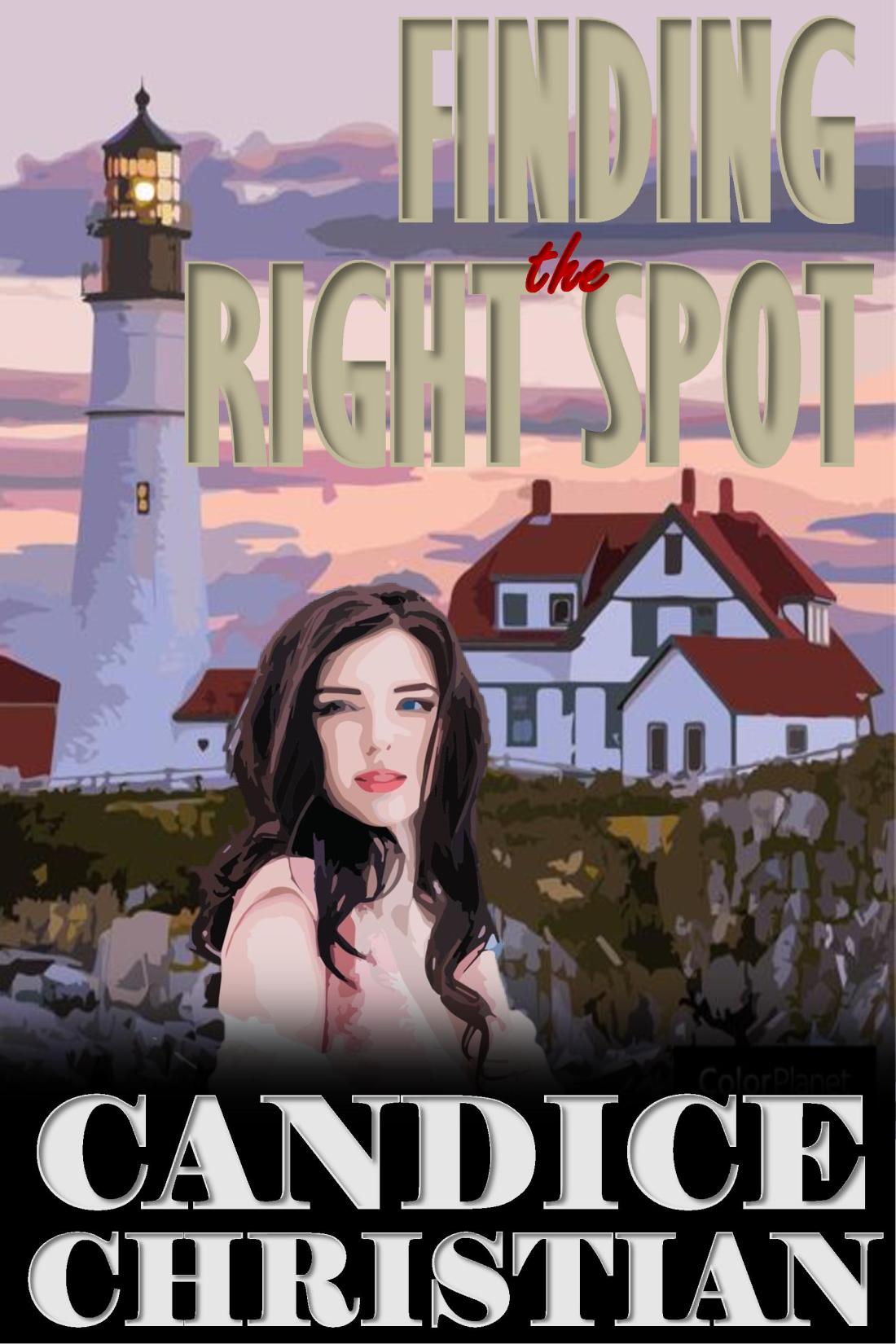
FINDING THE RIGHT SPOT

Stephanie Kelley, a college dropout, and free-lance handywoman travels to Nova Scotia looking for work.

FINDING THE RIGHT SPOT

CLICK HERE TO PURCHASE

FINDING THE RIGHT SPOT COVER-page-001

Stephanie Kelley, orphaned at seven, was raised by her uncle, a successful contractor, and from him she learned all about construction, installing and repairing all things that had to do with general updates on commercial and home improvements.

Truly an adventurous girl she travels all over, doing work wherever she can find it. The novelty of a woman doing the work she offered, generally got her hired more times than not for regular home improvement jobs.

She stops at the small hardware store and checks for any work that may be posted there, which is common in small towns. Good luck smiles and she is given directions to an old home whose new owner wants to upgrade. Stephanie or Steve as she likes to be called is hired on the spot.

The work goes well and the woman she works for sings her praises to everyone in the small town. A month in the small town she is convinced to attend a Church Dance at the local Hall. There she meets up one of the workers from the hardware store and next she finds herself on the lover’s lane, with the handsome but inept lover.

The failed night at the Church dance ironically became a catalyst for a drastic turnaround in Steve’s romantic life. Even if they are coming from unexpected suitors. She soon is embroiled in a lesbian love triangle. Can the young wanderer deal with the small-town drama, or will she bolt the first chance she gets and resume her journey to find the right spot to settle?

***

Connect with Candice Christian

I really appreciate you reading my book! Please, if you have time, review my book. Here are my social media coordinates:
Join me on Facebook Group:
https://www.facebook.com/pg/Fans-of-Candice-Christian-2167845756865295/about/?ref=page_interna
Favorite my author page:
https://www.smashwords.com/books/view/914732
Subscribe to my blogs:
https://eroticlesbianromance.blog/
https://candicechri.blogspot.com/
Visit my website for free stuff and news about releases:
https://candicechristian20.wixsite.com/website

Bri and Lindsey Leaverton Had a Socially-Distanced Drive-In Wedding

This is a great and timely article from Out Magazine written by:

As is common today, Bri Houk and Lindsey Leaverton met on the dating app HER. They exchanged a few messages and then, within 12 hours, went on their first date, taking wine and a blanket down to Austin, Texas’s free concert series Blues on the Green. The date happened to also be Leaverton’s birthday. Three days later they were officially girlfriends and five days later Houk was professing her love. Now, this week, the pair conjoined their families at a drive-in movie theater-hosted wedding, where they wore cowboy boots under their gowns to walk down the dirt-road of an aisle as about 80 cars of friends and family looked on. But it all started from that first date.

“It sounds crazy but it’s true,” Houk tells Out. “That night, when we got home, we both deleted our app. Three days after our first date I asked her to be my girlfriend and five days after that I told her I loved her. It was just in true lesbian fashion, you know you become girlfriends, fall in love, and get married.” But what was it, exactly, on that summer of 2018 date that stood out?

bri-lindsey-wedding-april-28-2020-buda-tx-40

For Leaverton, who is a wealth manager, it was Houk’s ability to not only keep up with the conversation but keep her on her toes. But for Houk, who works in dentistry, it was a specific comment that Leaverton says she never planned on making.

“I was a single mom so I had spent about a year doing some really good self-work and not dating anyone,” Houk explains. She brought a son into the relationship while Leaverton brought twin daughters.”When I finally met Lindsey, I was in a place where I was really ready to invest in someone because I knew that the next person that I invested in was going to be my forever person. When we were sitting on that blanket in the middle of a park on our first date, she looked at me in the middle of a conversation she said ‘Hey I just want you to know that I see you, I honor you, and I believe that you are so worthy of this.’ And it just stunned me for a minute because no one in my entire life like no one in my entire life has ever told me that they see me.” And it was at that moment that they both knew this was different.

THE GOLD STANDARD

Gwen showed Jacqueline what it meant to be on…

THE GOLD STANDARD

Jacqueline is asked to return a cell phone to one of her mother’s friends, little did either know the mess doing so would bring.

CLICK HERE TO PURCHASE

THE GOLD STANDARD COVER-RESIZED

Jacqueline is a twenty year old college student who lives at home with her divorced mother, who is involved romantically with another woman, Gwen. Something that Jacqueline is well aware of and nothing her mother tries to hide from her.

The mother asks her daughter to return Gwen’s cell phone she had left during one of her visits. The trip gives Jacqueline a chance to get out of the house and take her mind off school work. Gwen is surprised when the daughter arrives with the phone and asks her in for a drink.

Gwen and Jacqueline’s mother are in a modern lesbian relationship and both date other people of either sex quite often. The ramifications of that situation never occurred to the twenty year old, until Gwen makes it clear she would like to get down and dirty with her.

Needing some time to think about the older woman’s advances she asks to use the bathroom, and Gwen graciously shows her the way, up to and including entering the bathroom with her.

The young girl is taken off guard since she never thought of being seduced in the bathroom until Gwen boldly remained in the rest room and infringing on the girls privacy. Jacqueline, also bi-sexual and being the adventurous type decides to let Gwen’s action continue to just see where they lead.

***

Connect with Candice Christian

I really appreciate you reading my book! Please, if you have time, review my book. Here are my social media coordinates:

Join me on Facebook Group:
https://www.facebook.com/pg/Fans-of-Candice-Christian-2167845756865295/about/?ref=page_interna
Favorite my author page:
https://www.smashwords.com/books/view/914732
Subscribe to my blogs:
https://eroticlesbianromance.blog/
https://candicechri.blogspot.com/
Visit my website for free stuff and news about releases:
https://candicechristian20.wixsite.com/website