They were always ready for… SOMETHING NEW!

SOMETHING NEW

Two teachers at Philo High stumble upon an empty classroom where two coeds are engaged in a lesbian tryst. The shock at seeing it, causes an unusually erotic response from the young teachers.

PLEASE CLICK HERE TO PURCHASE

SOMETHING NEW COVER-RESIZED

Kala and Nomi are twenty-something teachers at Philo High. The school is filled with typical workplace gossip, scandal, and illicit affairs. The two had remained above the fray, up until the chance discovery of two eighteen-year-old girls engaged in hot lesbian sex, affects them both in the way they never dream would ever happen.

That evening, over dinner together, a surprising discussion on their discovery leads to a mutual seduction of the other. Kala and Nomi begin acting like young teens in the backseat of a car and begin their lesbian experimentation.

Their arousal and their passion take them from a steamy make-out session on the couch to a sweaty episode of wild abandonment in a queen-sized bed. Both young women learning how to please a woman as they continued through the evening. Even bringing erotic accessories to the bed, they continued on in search of something new.

Connect with Candice Christian

I really appreciate you reading my book! Please, if you have time, review my book. Here are my social media coordinates:
Join me on Facebook Group:
https://www.facebook.com/pg/Fans-of-Candice-Christian-2167845756865295/about/?ref=page_interna
Favorite my author page:
https://www.smashwords.com/books/view/914732
Subscribe to my blogs:
https://eroticlesbianromance.blog/
https://candicechri.blogspot.com/
Visit my website for free stuff and news about releases:
https://candicechristian20.wixsite.com/website

Holland Taylor

holland_taylor_advocate

This interview was conducted as part of the LGBTQ&A podcast.

Since winning an Emmy award in 1999 for her breakout performance in The PracticeHolland Taylor has been a constant presence on screen in shows like Two and a Half Men where she played Charlie Sheen’s bisexual mother, The L Word as billionaire Peggy Peabody, and most recently, Hollywood, the hit Ryan Murphy show that earned Taylor another Emmy nomination.

Though the 77-year-old has only recently started discussing her relationships publicly in interviews, Taylor says her sexuality has never been a secret; it’s simply been private. “I’m more free talking about my personal life now because people do speak very personally in interviews. But when I was younger, I didn’t have a big public marriage or relationship with children and a big public life. I just lived my life normally. I wasn’t behind closed doors,” she says. “It would never have occurred to me to talk about my personal life in an interview anyway.”

Holland Taylor, who can be seen next as The Great Leader in Bill and Ted Face the Music (available digitally and in select theatres on August 28th), talks on the LGBTQ&A podcast this week about not wanting to be confined by labels, working with Ryan Murphy on Hollywood, living in New York City during Stonewall and the AIDS crisis, and what it’s like to be in such a public relationship (with actress Sarah Paulson) for the first time.

Jeffrey Masters: You’re 77 and seem to have never been busier.
Holland Taylor: I know, I know. I’ve had an extraordinary career in that the usual plight of the actor, which is long periods of not working, has not been my situation. I’ve really worked pretty steadily. My beginning years were hard because I was too young to play the parts that I was right for. Because I was never an ingenue. But once I hit my stride, I’ve really never had a hard period.

That is so atypical that I feel kind of guilty about it. I’ve been blessed with good fortune.

JM: Are the anomaly amongst actresses your age or are you seeing that across the board?
HT: Oh, I’m seeing a lot or maybe because I’m in the Ryan Murphy universe, I mean, Ryan Murphy has an enormous interest in women as characters on their own, separate from any relationship they may have with whatever man is in their purview. Female actors are used to having roles that are connected to a man: you can’t just be a person whose story is being told. You are the wife of, the mother of, the daughter of, the friend of, the sister of a man.

And you think about it. There are very few stories that are just about a woman’s life, how she lives her life, what her life means to her in some sort of existential way just doesn’t exist or there are many rules like that. I think now in the Ryan Murphy world, he sees women. He sees women and their particular evolution of their life and how they realize themselves. He finds it very interesting. So there’s plenty of women and elder women in his world.

JM: One of my favorite scenes from Hollywood was between you and Joe Mantello when you discussed what your relationship was. It stood out as being rare to see a character your age talking about those things. 
HT: Yes. We were very aware of how rare a scene it was and as such, we really wanted to do it well. We had a lot of sort of fluttery nerves about it because it seems such a critical scene and you can’t really fully write out a scene like that because so much is unspoken, so much is difficult to say.

It’s such an ineffable occurrence that happens when one person reaches out to another and the reach is not grasped. In fact, I’m sort of feeling a tightness in my throat just thinking about it because it was a scene of such delicacy and we really so wanted to do it well. People never forget moments of such delicacy and human pain and human stress and human yearning.

JM: I’m a bit surprised to hear you say that you were nervous. My assumption would be that at 77, you wouldn’t deal with nerves anymore. 
HT: A lot of things in acting happen or they don’t happen. And it’s ineffable. It’s hard to put your finger on it. When two characters are working together, there is always an element of magic to it. And sometimes it clicks and sometimes it just doesn’t, and it’s hard to really control.

There is a sense of it walking on a tight rope always in acting. You have to be very alert and you and your partner have to pick up each other’s infinitesimally delicate cues. And it’s very moving when you are in connection with another actor. It’s like being in outer space and there’s a little speck. And these two little specks, they come within communication, blinking distance, and they blink and then they pass on. It’s very, very delicate.

JM: When you were first starting out, how did you see queerness being treated by the industry?
HT: Living a long life, you don’t always remember. When I started out, I mean, it was a time when gay characters were real anomalies and they were probably in the story because of their gayness. So often they would be stereotypical in that sense. I don’t really remember when it just changed really quite dramatically. It probably was after AIDS.

After AIDS, you could not do stereotypical gay characters. You just could not do it. Do you remember when Stonewall was? Was that in ’66 or 67?

JM: It was ’69.
HT: ’69 was Stonewall? I don’t think I’d even had a gay relationship then, but everybody I knew was gay. Everyone in my social life was gay it seemed to me. I mean, the theatre and artists and poets and writers.

It’s so funny that I say that, but all the artists I knew were gay. That isn’t true, but a lot were and maybe it’s a broad sense of acceptance in life you find in the arts community. So for me, I didn’t feel isolated. I didn’t feel it as such an ostracizing thing because my whole society was very inclusive of every kind of person from the time when I was a young adult. So I’ve never been that actively political except during the AIDS period when I was very. That was a very shocking time. You talk about a pandemic.

JM: In 2015, you publicly shared for the first time that you were in a relationship with a woman. Why was that the right time to share that with the public?
HT: Well, I’m a very private person, just generally. I would be no matter what my life was, but I was not private in the sense of hiding. I lived my life in public. I think I was about 29 or 30 when I had my first relationship with a woman, but I didn’t talk about it per se. It would never have occurred to me to talk about my personal life in an interview anyway.

When I started to be known, it was just a subject that never came up in a sense that no one would ask me. I don’t know why no one would ask me, but they didn’t. And I don’t know what I would have said. It’s so funny. I can’t really remember any anxiety about that. I had not been in a relationship for a very long time.

The relationship was with Sarah [Paulson] became so public because she’s an enormous star and I was somewhat well-known. It became a news event and so I wasn’t going to deny it. Do you see what I’m saying? Other relationships that I had have not been with famous people. No other relationship I had would become a news event in that sense. When once that happened, there was no way not to just speak about it.

 click here to listen to the full interview. 

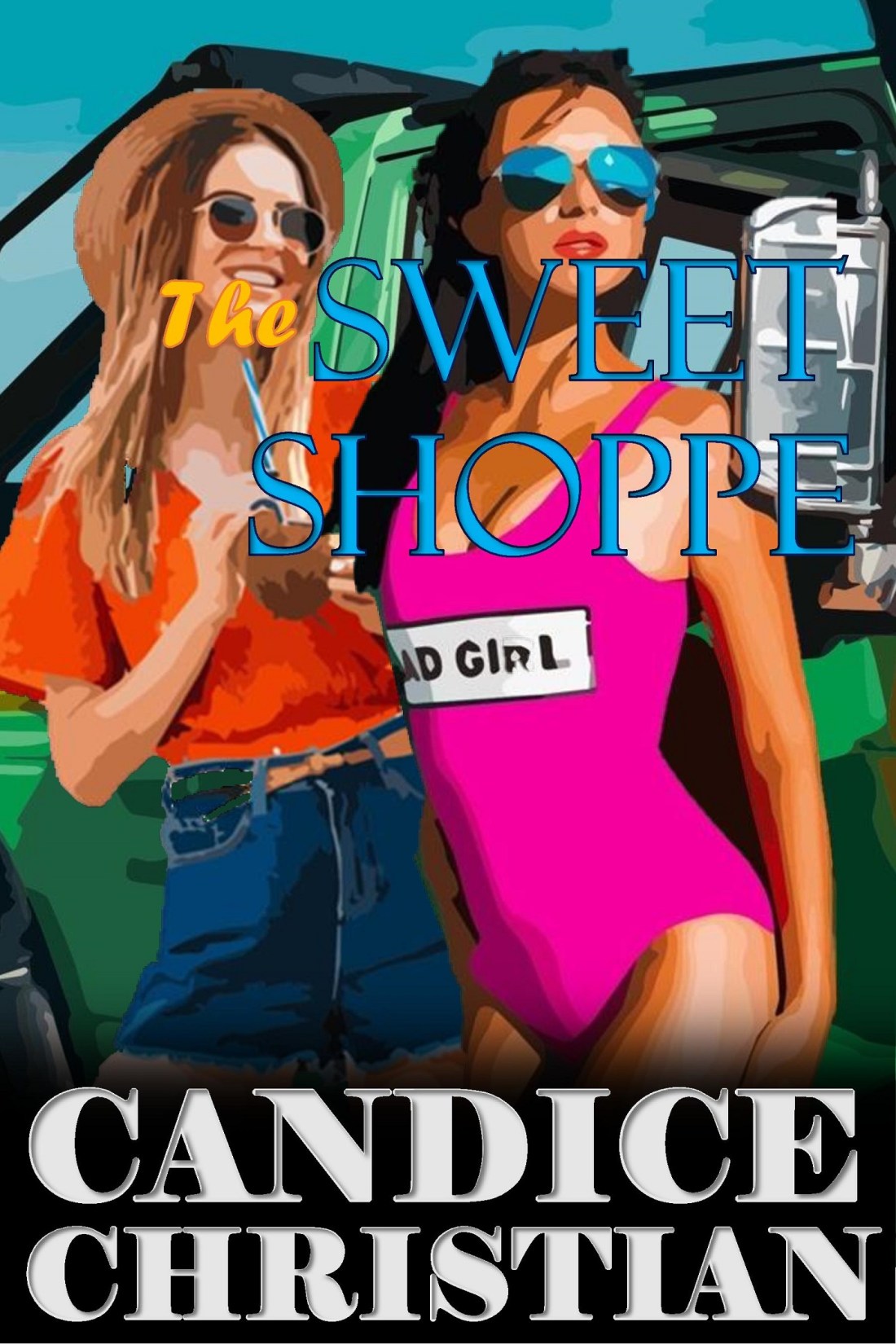
THE SWEET SHOPPE

THE SWEET SHOPPE

Rebounding from a failed relationship, Katie O’Gill moves to Florida in hopes of forgetting her heartbreak.

PLEASE CLICK HERE TO PURCHASE

THE SWEET SHOPPE COVER-RESIZED

Schoolteacher, Katie O’Gill, moved from Detroit to Ft. Myers to get away from all reminders of her failed relationship with Nora an older woman. Katie walked in on Nora in the middle of a threesome with two young female school teachers.

Taking the new job and settling into a new town provide Katie with several opportunities. Finding a new girlfriend is the first priority, another one is finding a doctor and a dentist. Both tasks become harder than she thought they would be.

After two weeks Katie is still without a girlfriend but does find a dentist, Dr. McBride, tall, dark, and female. The good doctor is cordial to Katie but is completely professional and Katie is resigned to the fact a Dentist is not in her future.

On a whim Katie takes a Saturday night and goes clubbing at an all-female establishment and has a rather lukewarm evening, searching for romance, and thinks about leaving after she finishes her drink. However, when the girl of her dreams takes the stool next to her she thinks maybe her luck has changed.

Connect with Candice Christian

I really appreciate you reading my book! Please, if you have time, review my book. Here are my social media coordinates:
Join me on Facebook Group:
https://www.facebook.com/pg/Fans-of-Candice-Christian-2167845756865295/about/?ref=page_interna
Favorite my author page:
https://www.smashwords.com/books/view/914732
Subscribe to my blogs:
https://eroticlesbianromance.blog/
https://candicechri.blogspot.com/
Visit my website for free stuff and news about releases:
https://candicechristian20.wixsite.com/website

Why Ruby Rose Left CW’s ‘Batwoman’

I for one am glad that has been cleared up. Nothing sinister, or untoward. She quit for good reason.

OUT logo

Ruby Rose Finally Explains Exactly Why She Left CW’s ‘Batwoman’

ruby rose

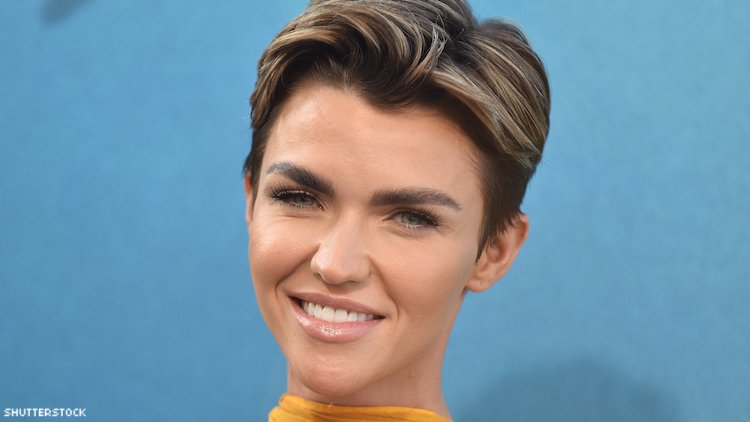
When Ruby Rose abruptly announced in May that she was leaving her dream job of playing the first lesbian superhero in the lead role on CW’s Batwoman after only one season, rumors swirled as to the reason. Now in a new interview, Rose opens up and reveals that while injuries weighed heavily in her decision, it was a reevaluation of her life goals during the pandemic-induced filming hiatus that allowed her to reevaluate her goals in life.

“You know, you have time in quarantine and sort of isolation to just think about a lot of different things and what you want to achieve in life and what you want to do,” Rose told Entertainment Weekly.

There was considerable outcry on social media when Rose, who is genderfluid and a lesbian, was cast in the role. The Orange is the New Black actor was met with tweets from some who seemed unaware she was queer. There was further outcry when Rose seemed to push off the sexuality of the role as insignificant. Rose addressed the complaints last September when she told Buzzfeed’s AM to DM she didn’t really care about the backlash because she “worked really hard to get that role.” But then she quit leaving many to wonder why.

“Being the lead of a superhero show is tough,” Rose told Entertainment Weekly. “Being the lead in anything is tough. But I think, in that particular instance, it was a lot more difficult because I was still recovering from my surgery.”

Rose underwent emergency surgery last year to repair two herniated discs that threatened to paralyze her due to an on set stunt injury. At the time, she spoke of “chronic pain” and the inability to feel her arms.

Despite the severity of the injuries and surgery, Rose was back on the set working in less than two weeks, which she admits in retrospect “maybe wasn’t the best idea” since most people “take about a month or three before they return to work.”

Rose tells Entertainment Weekly she is more than happy with Javicia Leslie taking over her former role on the series, saying “she seems fantastic” and that she was “proud and so happy” when she learned the news. Leslie will be the first Black actress to play the iconic role.

“I’m just really stoked and I’m definitely going to watch the next season as well and see how it all comes together,” Rose said.

Amanda tries to prove that she’s no…LESBIAN LOSER!

L E S B I A N    L O S E R

The story of Judy, a predator, and Amanda, her prey, whose real roles become blurred as the relationship rollercoasters around them..

PLEASE CLICK HERE TO PURCHASE

LESBIAN LOSER COVER-RESIZED

Judy Collins is a dominator, and a woman on the prowl, looking for some unsuspecting prey to take home and share with the mysterious Makenzie. Right now Amanda is in her sites and like a deer in the headlights is no match for Judy’s skills.

Amanda is taken to Judy’s place where Judy uses her and abuses her. Half the fun for Judy is the inflicting as much humiliation she can on her snared prey. Amanda is hopelessly trapped and is served up as a feast for Judy and her protege Makenzie.

Like a cat with a mouse though, eventually, the cat tires of the game and discards its prey and moves on to the next shiny object to chase. In Judy’s case, she dumps Amanda and moves her and Makenzie to another town. Leaving Amanda, confused, heartbroken, and finally angry.

The saga comes to a climax when Amanda unexpectedly runs into Judy while visiting Judy’s new town with a friend of hers. But now, Amanda is firmly in control of her own self-respect, and her dignity and goes about demonstrating her self-confidence to her ex-mistress with some very penetrating lessons.

Connect with Candice Christian

I really appreciate you reading my book! Please, if you have time, review my book. Here are my social media coordinates:

Join me on Facebook Group:
https://www.facebook.com/pg/Fans-of-Candice-Christian-2167845756865295/about/?ref=page_interna
Favorite my author page:
https://www.smashwords.com/books/view/914732
Subscribe to my blogs:
https://eroticlesbianromance.blog/
https://candicechri.blogspot.com/
Visit my website for free stuff and news about releases:
https://candicechristian20.wixsite.com/website


The Windows to the soul…THE PLEASURE IN HER EYES!

THE PLEASURE IN HER EYES

Two women, Tracey, and Shannon discuss the idea of lesbianism. Since neither has ever had an inclination in that direction the two decide an experiment open their eyes to what the fuss is all about.

PLEASE CLICK HERE TO PURCHASE

THE PLEASURE IN HER EYES-rESIZED

Shannon Wolfe, relates a dream to her co-worker, Tracey Conner. The dream involves the two of them in a lesbian relationship. Both quickly make it clear they are not gay nor have either of them thought about it.

The conversation sparks both women’s interest and together they decide they are somewhat curious. The more they talk the more they decide to take walk on the wild side and try some of the more interesting aspects of lesbian sex.

The ‘wild side’ walk takes the women from conventional girl-girl sex and leads to more adventurous activities, where the two explore every inch of each other and even taking it into domme and sub and other more physical role-play games. Will the experiment change the two women and the trajectory of their lives?

Connect with Candice Christian

I really appreciate you reading my book! Please, if you have time, review my book. Here are my social media coordinates:
Join me on Facebook Group:
https://www.facebook.com/pg/Fans-of-Candice-Christian-2167845756865295/about/?ref=page_interna
Favorite my author page:
https://www.smashwords.com/books/view/914732
Subscribe to my blogs:
https://eroticlesbianromance.blog/
https://candicechri.blogspot.com/
Visit my website for free stuff and news about releases:
https://candicechristian20.wixsite.com/website

Megan Rapinoe and Alexandria Ocasio-Cortez Fix Our Lives In New Show


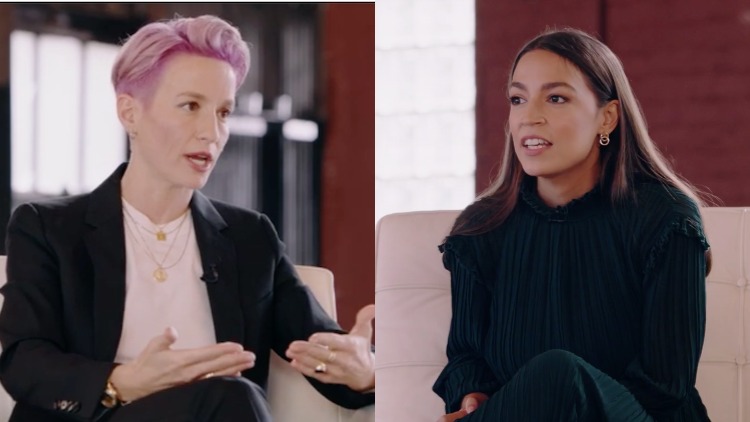
Megan Rapinoe has conquered soccer, put a petulant president in his place, and now she’s turning her talents to television. Seeing America with Megan Rapinoe, features the outspoken Olympic champion in a free-flowing conversation on HBO with thought leaders like Representative Alexandria Ocasio-Cortez, The 1619 Project creator and New York Times journalist Nikole Hannah-Jones, and comedian Hasan Minhaj. The show premieres Saturday, August 1, exclusively on HBO.

“It is an honor to host a show with a critical conversation between some of America’s most innovative thought leaders,” said Megan Rapinoe. “I am so thankful to HBO for providing such a powerful platform for this important dialogue.”

AOC thanked Rapinoe for “an incredible discussion” and the opportunity to “discuss our present and future” with such a diverse group of thought leaders.

Joining Rapinoe and AOC in the conversation is Pulitzer Prize-winning journalist Nikole Hannah-Jones, who covers racial injustice for the New York Times and is the creator of The 1619 Project. Rounding out the conversation is writer, comedian, producer, and political commentator Hasan Minhaj. His Patriot Act on Netflix has won two Peabody Awards and two Webby Awards.

At times it seems Rapinoe is as revered for her unabashed support of progressive causes as she is for her many athletic accomplishments. She once famously opined she was not “going to the fucking White House” because of President Trump.

The network expressed its gratitude to Rapinoe for choosing the network as the “home for this conversation” and looked forward to future opportunities, Peter Nelson, executive vice president, HBO Sports, said in a statement.

“Megan is fearless in speaking out on issues,” Nelson said. “Joined by Rep. Alexandria Ocasio-Cortez, Nikole Hannah-Jones and Hasan Minhaj, this conversation embraces the challenges we collectively face.”

The show premieres Saturday, August 1 (10:00-10:30 p.m. ET/PT), exclusively on HBO and can be streamed at HBO Max.

Their demonstration led to …CARNAL CONFINEMENT!

CARNAL CONFINEMENT

Three young law students get coerced into joining in a demonstration at their college. Too late they find they have been duped by the organizers.

PLEASE CLICK HERE TO PURCHASE

CARNAL CONFINEMENT COVER-RESIZED

Jennifer and her two girlfriends are law students at a state college in Florida. They are approached by an activist organizer to join in their demonstration for changes at the university. Something as law students would be a good experience.

The unwitting coeds agree to what they think is a worthwhile cause but learn too late they have been used for a completely different agenda, and the girls are embroiled in rioting and confrontations with the police where Jennifer accidentally rips off a female police officers shirt.

When the girls look around, all the leaders of the demonstration are long gone and the girls are arrested. Because it is Friday afternoon, they are forced to remain in confinement over the weekend and soon learn the police plan to teach the young girls a lesson.

The lesson they learn is a comprehensive education in sex, unlike any sex education, the girl ever attended in their lives. Resistant at first the girls realize the best decision is to suck it up and make the most of their time in incarceration.

Connect with Candice Christian

I really appreciate you reading my book! Please, if you have time, review my book. Here are my social media coordinates:
Join me on Facebook Group:
https://www.facebook.com/pg/Fans-of-Candice-Christian-2167845756865295/about/?ref=page_interna
Favorite my author page:
https://www.smashwords.com/books/view/914732
Subscribe to my blogs:
https://eroticlesbianromance.blog/
https://candicechri.blogspot.com/
Visit my website for free stuff and news about releases:
https://candicechristian20.wixsite.com/website

AN EROTIC VANTAGE POINT…is something to have!

AN EROTIC VANTAGE POINT

Three lesbian strangers, Peta, Feema, and Cynthia meet in Key West and spend the most erotic day of their lesbian lives.

PLEASE CLICK HERE TO PURCHASE

AN EROTIC VANTAGE POINT COVER-RESIZED

Peta has flown down from Toronto to Key West in search of rest, relaxation, warm beaches, and sex. Not necessarily in that order.

When Peta arrives at the beach, it isn’t long before she meets up with Feema, a Hispanic school teacher from Miami. Feema’s interests mirror those of Peta and the two woman try to find as many places to get naked together as they can.

The day moves to evening and the two new friends decide to go clubbing. They select the Bare Assets Club, a place where lesbians go to party, dance, and hook up. The two new friends soon find another woman Cynthia that seems to be interested in them. She joins them on the dance floor and find they have quite a bit more in common that just sexual preferences.

Cynthia is also from Canada, Montreal actually and looks to be an identical twin to Peta. The sexually charged atmosphere of the club, and the tension between the to twins, turns into a competitive situation, with poor Feema forced to watch from the sidelines.

Peta and Cynthia challenge each other to several contests: Muscle posing, leg wrestling and finally a sex-fight. Leaving the club, the three head to a secluded beach to find the top Canadienne.

Connect with Candice Christian

I really appreciate you reading my book! Please, if you have time, review my book. Here are my social media coordinates:
Join me on Facebook Group:
https://www.facebook.com/pg/Fans-of-Candice-Christian-2167845756865295/about/?ref=page_interna
Favorite my author page:
https://www.smashwords.com/books/view/914732
Subscribe to my blogs:
https://eroticlesbianromance.blog/
https://candicechri.blogspot.com/
Visit my website for free stuff and news about releases:
https://candicechristian20.wixsite.com/website

Young queer women don’t like Lesbian as a name…here’s why.

I know, this is in fact a dated repost, but with the way the craziness of 2020 has spun out of control, it’s time to look at relevant issues that sometimes get pushed aside during times like this. 

This is a piece from Slate which is actually a reprint of an older OUTWARD article. I have posted several pieces from OUTWARD and they are all top-notch.

OUTWARD

For Many Young Queer Women, Lesbian Offers a Fraught Inheritance

By CHRISTINA CAUTERUCCI DEC 20, 201612:05 PM

SLATE MAG ARTICLE

Some years ago, a close friend and I developed a not-so-subtle code for queer women too basic for our tastes: We’d make an “L” with our thumbs and forefingers against our foreheads, like the loser sign that was popular when we were in middle school. In this case, the “L” stood for lesbian.

We, too, were lesbians—generally speaking. But the women my friend and I mocked (and trust, I am duly shamed by this memory) were what we’d call “capital-L lesbians.” We were urban-dwelling and queer-identified and in our 20s; the other women came from the suburbs, skewed older, and were, we presumed, unversed in queer politics. We traveled in circles of dapper butches and subversive femmes; the other women either easily passed as straight or dressed generically sporty in cargo shorts and flip-flops. A woman in this category was clearly down with the assimilationist, trans-exclusive politics of the likes of the Human Rights Campaign. She was the kind of dyke for whom the laughable niche Cosmopolitan lesbian-sex tip “tug on her ponytail” might actually apply.

In other words, we shared a common sexual orientation, but little, if any, cultural affiliation. In the space between “lesbian” and “queer,” my friend and I located a world of difference in politics, gender presentation, and cosmopolitanism. Some of our resistance to the term lesbian arose, no doubt, from internalized homophobic notions of lesbians as unfashionable, uncultured homebodies. We were convinced that our cool clothes and enlightened, radical paradigm made us something other than lesbians, a label chosen by progenitors who lived in a simpler time with stricter gender boundaries. But with a time-honored label comes history and meaning; by leaving lesbian behind, we were rejecting, in part, a strong identity and legacy that we might have claimed as our own. While all identities are a product of their respective historical moments, starting from scratch is a daunting prospect. And so we’re left in a gray area of nomenclature, searching for threads of unity in our pluralism, wondering what, if any, role lesbian can play in a future that’s looking queerer by the day.

Cultural connotations aside, the main reason my friend and I felt (and still feel) more comfortable with queer than lesbian was practical: The word lesbian, insofar as it means a woman who is primarily attracted to women, does not correctly describe our reality. My personal queer community comprises cisgender and transgender women; transgender men and transmasculine people; and people who identify as non-binary or genderqueer. One friend told me queer works better for her and her female spouse because lesbian implies a kind of sameness she doesn’t see in her relationship or those of her peers. In her circles, as in mine, most romantic partnerships lean butch-femme or involve at least one trans or genderqueer person. Many of us have had or are currently enmeshed in sexual or romantic relationships with people who aren’t women. Using lesbian to refer to my queer sphere (e.g. “She’s hosting a lesbian potluck!”) excludes many people I consider my peers. In most young, urban queer communities, at least, lesbian, in its implication of a cisgender woman to cisgender woman arrangement, is both inaccurate and gauche.

But then, it’s hard to organize around a community without a name. I co-host monthly queer tea-dance parties in the warmer months, and my partners and I have struggled to promote our event to our desired audience. We called it a “ladies’ tea dance” for the first few years; one of my fellow co-hosts was a well-known trans guy in the community, and we thought his leadership would be enough to make it clear that anyone with social connections to queer women would be welcome, too. When some transgender attendees told us that the “ladies” terminology felt exclusive, we agreed, and started using the word queer on its own. But in D.C., as in most places, queer parties that get labeled without a gender often default to gay men, who crowd the rest of us off the dance floor. And while we’d never turn away cis gay men (one of our favorite guest DJs is one), I believe it’s important to carve out spaces that explicitly focus on women, especially as lesbian bars and publications shutter en masse. Basically, we wanted to promote our party to women—plus all queer or trans people who aren’t cisgender men.

Unfortunately, there’s no word for that. So my peers and I have found ourselves using the phrase not cis men to describe the makeup of our friend groups, political identity groups, and the people we want to come to our dance parties. It’s functional, but a bit hollow: There’s a feeling of being uprooted from time, place, and meaning that comes with defining ourselves by what we are not. Lesbian has a rich political and social history; not cis men establishes our identities quite literally on someone else’s terms. It gives cis men power and presence, assets they already disproportionately control, in conversations that have nothing to do with them. And it reaffirms cis male identity as the norm from which all others deviate. Not cis men is the non-white people to people of color.

That said, non-specificity is part of the appeal. Not cis men and queer are broad enough to include not only transgender and genderqueer people (and those who date them) but bi- and pansexual women who are often sidelined in lesbian society. Still, an increasing number of young people who are more or less straight are identifying as queer as a statement of political worldview rather than sexual orientationLesbian leaves no doubt that a woman’s sexual and romantic affinities run toward other women. In a world that preferences heterosexual pairings, lesbians face a very different reality than queers-in-name-only, giving the term the power of a blunt, plainspoken, unapologetic declaration. Sex and the City, funnily enough, neatly captured this debate way back in 1999. In one episode, a few art-world lesbians reject Charlotte’s attempts to insert herself into their cabal, telling her, “if you’re not going to eat pussy, you’re not a dyke.”

That seductively simple definition of dyke or lesbian would never fly in most circles of queer women today, attuned as we are to multiplicities of gender and genitals. But the male variation—“if you’re not going to suck cock, you’re not a faggot”—is less likely to raise hackles in the average clique of gay men. Where spaces that cater to lesbians and queer women are very likely to accommodate transgender and non-binary people, too, social gatherings of gay men are typically far less diverse, gender-wise. And our femininity-devaluing society leaves far more room for women than men to claim a fluid sexual orientation, meaning queer women are more likely to have current or former partners who aren’t women. That’s why it’s both easy and usually accurate to label circles of gay men as “gay men”—and why gay men are relatively free from the perpetual infighting over labels and politics that seems common among segments of queer women.

CLICK HERE TO READ THE ENTIRE ARTICLE

slate.com/blogs